Welcome back to the Follow Your Gut podcast.
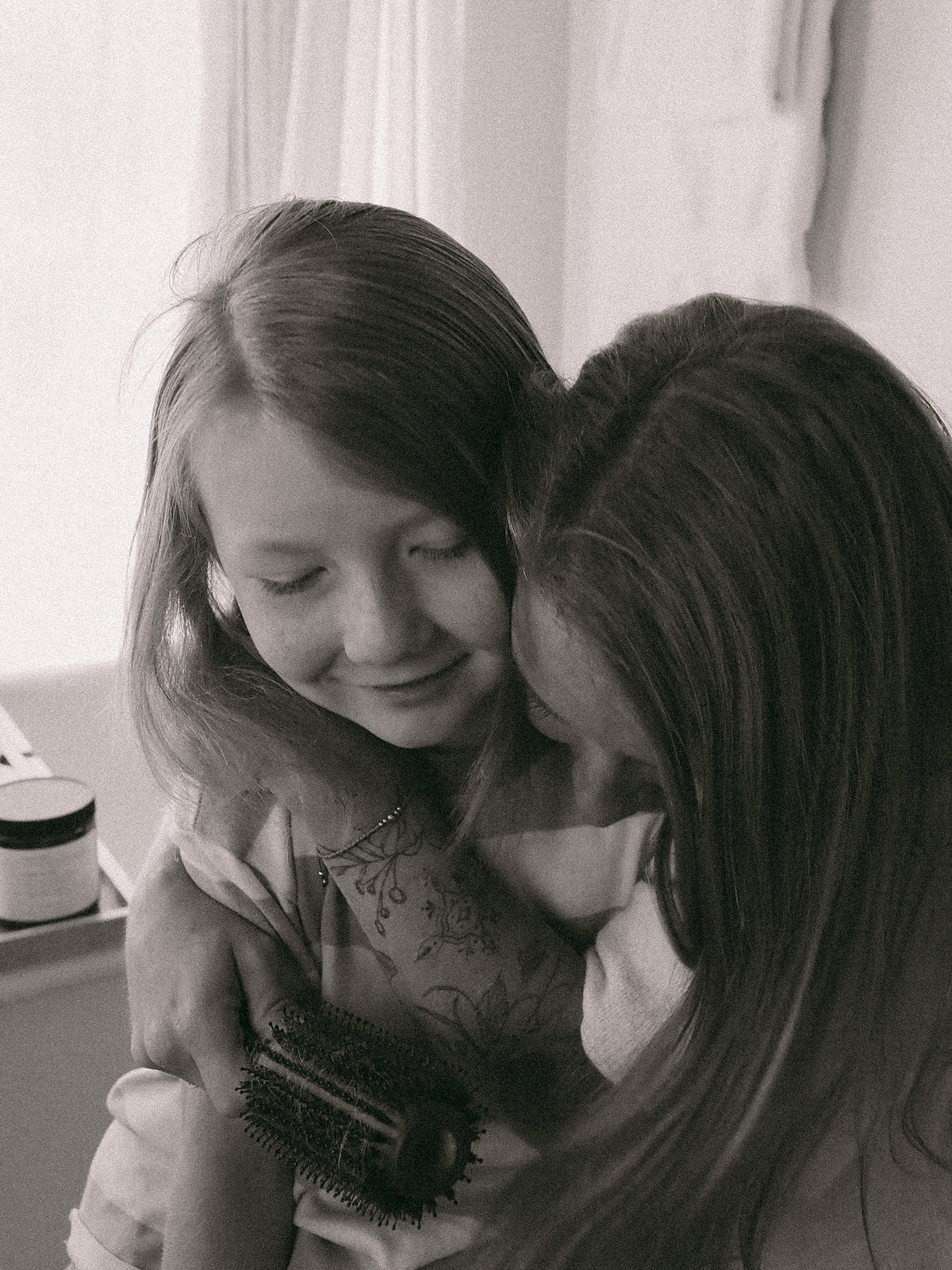
Today I am on a walk with my sister in Tennessee. My sister Cait is the person behind every customer care email. And as I'm here with her, I thought it'd be really special to bring her on and have a conversation about what it's like being in customer service behind a brand that is deeply committed to human connection.
In a time where a lot of businesses are replacing humans with AI, and when you have a customer service need, the best that you get is a message from an AI bot, and we are so deeply committed to doing it differently. I want you to hear Cait and what it's like being on the other side of that.
So Cait, will you introduce yourself? Share a little bit about who you are and what you were doing before you came to ōnlē. I'd love to talk about how long you've been here and how your role has kind of ship ship shaped ship shifts shaped it shippy shaped itself. But first, I want to share with you, I don't know if you know this story.
So it used to just be me and Ty. Ty, when I was beyond my capacity, Ty took over customer care emails and inventory and ordering from our manufacturers and his role grew. And when he was of at his capacity, we started having the conversation of, okay, it's time to hire someone to come in and do customer care emails. And I remember asking him, where do we find this person? Who who is this person? He's like, I know exactly who it is. I was like, who? he's like, it's your sister.
I remember sharing it with you. And it was one of the first times where I got to see this similar characteristic that you and I have that I didn't know that we shared, which is when something makes sense, we move quick.
For a little bit of context, we didn't have the opportunity to grow up with each other. We are half sisters through our dad and grew up on opposite sides of the country and we're lucky if we got to see each other once a year. And when we were together, it was magic. And one of my favorite memories was I'm four years older. I we were at the public pool and these boys kept splashing me. I don't know how to do you think I was like fourteen. Yeah. You were probably ten, I was probably fourteen. And I did not want my hair wet. And these boys would not stop splashing me. And man, you, I can't remember. Did you just threaten to take them down? Did you take them down? you sh you may have taken those boys down. And the more that I sat with you know, because building a business from your heart is really it's i I mean it's an extension of me. It's it's so intimate. It's so personal and anyone who comes into ōnlē I mean it's like inviting someone into our home, into our hearts, into our family. And it's not just for anyone. I I I won't just entrust anyone with this position. And so the more that I sat with it, I I it was just such a my gosh. Ty's right. well how did I not see this?
So okay. I want to hear your experience.
Cait: okay. Well, I was teaching public school. I was an elementary teacher, and we had just had our fourth baby, and we were ready for something different. It was really hard to go to a job where you have to give your whole self and then also go home and give your whole self at home. And so I was feeling a little bit I was really tired. And so my husband and I, Ryan, we had kind of talked about trying to make s make a change and we weren't really sure at the time what that would look like. And I remember I think I had just gone back from maternity leave and you talked about the customer care position and when we talked about it at home, Ryan and I I was like that's I can't imagine something that would be better for us and getting to work with you. It just sounded right. And so I went to work and I gave my notice and I think you call we talked a few days later and you're like, you know, you can take as much time as you need, really think about it. And I said, Well, I quit my job yesterday.
And then and so I think we finished this school year and then we did I did customer care training with Ty and Dean was so little and he would just sleep the whole time, and it was I don't know, it was just it felt meant to be.
Juniper: I couldn't agree more and it's been this it's been the most beautiful. Mm, I think I know for me I've dreamed my whole life that you and I had the opportunity to have a closer relationship. And this has f fulfilled that dream for me and I'm so grateful and Ty's just Ty's funny and I love that you get to talk with him all the time and just experience him and all of it it's really special having you here, Cait.
Cait: Yeah. Yeah, I think that you know, before we would kind of talk and like, what's new? but it's much different having a common I don't know, I feel like you do get to know people in a different in a different sense.
Juniper: Yeah. And it's more like you know, before I feel like it was always this kind of catching up conversation. Whereas now it's it's more consistent conversation that just kinda has to happen because we work together. And I love that. I feel like, you know, it's it can be really hard to maintain a relationship that's thousands of miles apart. And, you know, those relationships that aren't convenient, they're not in your face. It's really hard, and I feel like this has given us a little bit of a structure to having the relationship that I've always dreamed that we could have. Okay, so I want to talk about what it's like for you being in customer care when here in 2026.
I mean, I don't know about you, but anytime I as a consumer ordering from a different company have a question or, you know, even FedEx my chances of interacting with a human is really far and few between. And I think that that's just kind of become a standard of what unfortunately of what everybody expects it means when you reach out to customer service. What is it like being in customer care when that is kind of the cultural norm now?
Cait: Well, I definitely think that it can be challenging sometimes for both ends. Like I know if I really need to talk to someone, then it can be frustrating to have to go through an AI chatbot or, you know, you just wanna talk to the person. And so I think that a lot of times when we receive emails, our customers some of them may think I'm gonna have to go through a chat bot or I'm not gonna get the answer that I really want originally. And so I think that once we go back and forth and you they find out that it there is a person, then you can just kind of read the change in tone. where originally it may just be like kind of more like in in order like do this versus you know here's my problem, how can you help? How can I help myself do this? And it's just very different.
Juniper: Well, I'm thinking of myself. when I go to Chat GPT and I'm asking Chat GPT to do something or to help me with something, it's very different than if I'm having a conversation with someone, right? Mm-hmm. and I think that culturally we're all getting a little bit jaded.
Cait: Absolutely.
Juniper: It's incredibly frustrating. I mean, we're staying in an Airbnb right now. It's not this one, but the last Airbnb that we stayed in, they had some AI system that we had to go through for everything. And it created so much delay and so much frustration. And I feel like you get stuck in loops. And and so I have this great compassion and personal understanding of thinking that that's what's happening and it's really important to me.
Just like how you I mean you had my back in that swimming pool. My mind thinks about that all the time. And in learning the ways to support you, because I mean you're really kind of the front line of and customer service, a lot of times it's you know, somebody's order arrived accidentally missing a piece. You know, every part of ōnlē is human. We make human mistakes. And so fulfillment might miss a piece of an order, or a bottle may arrive broken, or you know, maybe somebody's order they accidentally typed in the wrong address and they didn't realize and they're mad that their order's not there. And so you are naturally in a position where there's frustration. Add in that now people think that they're not even going to have the opportunity to talk to a human to help them and I would say that I think you have one of the hardest positions in the business. where it it's not you're not always met with kindness. And you are genuinely one of the kindest humans I've ever met.
And you have this ability to always be unwaveringly kind and loving and you work so hard to see the maybe someone's tone or what they're saying isn't isn't kind, but you have this ability to look deeper than that and see the intention behind it. How do you how do you do that? How do you meet all of the women and mothers that come into customer care emails with that, like maybe maybe that's a I think on a surface level it's easy to say that's just who who you are, that's your personality, but I know that it takes more intention and and work than that.
Cait: well, I think that and I am someone who I don't know. I like things do really I feel like I internalize things. So if someone is upset or frustrated, and they email and you can perceive that tone through the email, sometimes it's just hard to understand the tone through email. And I think that can go both ways too. But I think for me what I have to do is I just have to remove myself from the situation and that they're upset and one of the things that I had to do like in teaching was that if someone is already escalated, me being escalated is not going to make the situation any better.
And so I just have to take myself out of the situation and say, okay, they're upset. Let's see what the problem is and figure out how to respond. Because if someone is unkind and I'm not the most kind back, then they're not going to email back and be kind. So I just tried to try to solve the problem and usually if you can find the problem and the solution then everyone is happy again.
Juniper: Well, I mean I guess what you just said is so true in all of life and especially in motherhood, it makes me think of being a mom. Yeah. And being able to just hold space for what your children are experiencing and it that it doesn't mean anything personally about you. But also like having children, there's boundaries and in the context of having a business, we have policies for the sustainability of having a business and for both us and for our customers. So that there's clear expectations. And a lot of times, just like in motherhood with true to those boundaries and policies, it it it's really hard. And it takes because I know that you are a very you are a sensitive being, as am I. And we feel very deeply and we really care about what we're doing. because that's a whole other part of the conversation is I don't know what the percentage is of you know problems that you're looking to find solutions for with our customers versus the number of emails that are so raw and vulnerable. I mean it it's like a bleeding heart in an email.
And being able to hold space for these women and mothers is I mean it it's it's not something that we take lightly and all the time I'm just so grateful the people get to experience you. And you know, there's multiple times a week that Ty's like, Babe, are you kidding me? I just have to read you this email that Cait responded with. Because when he was in customer care, I mean he's he's very masculine and short sentences and punchy lines and Why are we making this complicated? You know? And so when he reads your responses, he's just in awe of your feminine, your love and your true care that comes through in these emails. It's really those are some of my highlights of my week. He's like, babe, listen to this one.
So okay, a lot of customer care work is helping find helping people find solutions to problems that they have. But additionally, you spend a lot of your time holding space for women and primarily mothers who have truly been to hell fighting for their child's symptoms and trying to find answers and support and they haven't gotten that yet. And so can we talk about as a mom yourself, when you receive these emails and a lot of times there's pictures and it's it's the most horrific rash you can ever imagine seeing or poop that you can't even imagine existed. Or you're seeing symptoms, you're reading about stories that really rip your heart out. And I know for me I get a lot of these in DMs and I find myself crying in sadness for these families. Can you share what that experience is like for you and and even what you've learned from these mothers who refuse to give up?
Cait: well I think first I've learned and I already knew, but moms are the strongest people that I've ever met. And I feel like it kinda comes in stages, like you do when you receive a message and it is so heavy and you just kind of have to sit with it for a second. I don't even know how to respond sometimes at first because I'm just I don't know, just so in awe that that they're still going and still fighting and looking for for real answers. And then I'm so excited to respond to them because I'm like, I'm really so glad that you're here.
I don't know, I never experienced that side of the rashes or the that kind of hurt with my own children and so I'm, but I've seen other families and seen that they come out so different and they have so many more opportunities in life and they can just breathe and I feel like So at first I'm really sad that you know, that they're in that season right now, but then I'm so glad, okay, you're here. Let's figure out how we can move forward. And so I just try to be supportive, I just just try to talk to them where they're at.
Juniper: Well, I love that and I think that that really when you come to ōnlē it's very different. I mean, we're not doctors and we're not going to cross that line and pretend that we are. ōnlē we are experts in gut health and the gut is the foundation of the body and all of the systems in our body is directly connected to the gut and when you go to that foundation, the body heals in the most profound, a lot of times unimaginable ways. Like the transformations that we get to read are insane. And knowing I mean, yeah, you're right. a lot of times I just sit in that deep sadness for what these families are experiencing and How sad it is that our system is failing us so badly.
But then knowing that they are they're here and we have a solution is amazing. Do you remember? I don't know that we I don't f I feel like I really isolated myself when my second was really unwell. that's really healing him is when ōnlē was born, but I didn't know it then. It didn't come to life until a few years later. But I don't think we really talked very much then. Do you remember that time?
Cait: No, I think I think that was kind of a I think that we were probably both very isolated for different reasons.
Juniper: Yeah. You had your twins. Yeah. I yeah. I've always wondered that if if you remembered that period or if I had shared things with you.
Cait: Well no, and I think too, I know for me if something is happening, especially if I feel like I don't know why something is happening or like really have a direction, then it's harder to talk about in the moment.
Juniper: I agree.
Cait: You know, later once you're on the other side, you can be like, Okay, this is the full story, this is all of it but when you're in the moment and you feel like you don't even know what to say or then it's just easier to not have more conversations.
Juniper: Yeah, I think you're right. And I think that that's why so many of the women in our community, it's so incredibly lonely and we purposefully isolate ourselves and a whole other layer of that is I think we all blame ourselves. And so we feel guilt and shame and we're embarrassed. And I mean I even thinking back now it makes me sick. I mean you get to see being together right now, and all eight of our kids together is so magic.
I'm trying to wrap my mind around even you as my sister seeing my family when my second had was imbalanced. we were the most chaotic, I didn't want to be around anybody. I mean I felt like I was feeling as a mother. Okay, I think this leads perfectly into my next question.
If you have the opportunity right now to sit across from that mom who has completely isolated herself and she's in the depths of it, what would you want to say to her?
Cait: I would probably just hold her hand.
Juniper: The sweetest response ever. My last question that I want to ask you is can you share a couple of ways that your family has used ōnlē products in ways that people might not even think to use them? I'll give you I'll remind you of one story. Maybe it's on the top of your head, but your dog.
Cait: Yeah. okay. last summer we were getting ready to go on vacation. And I was giving our dogs a bath and I'm always really scared because we have to take them to a kennel and so I'm always so scared that they're gonna get fleas. And so I was giving them a bath before they go in hopes that I don't know, maybe it would help. And I got soap in my dog's eye. He's Melinois. He is so busy and he moves so fast and he so the soap went right in his eye. And it got so red and he is so sad and he is so sweet and he's just looking at me in his little red eye and I was like, my gosh.
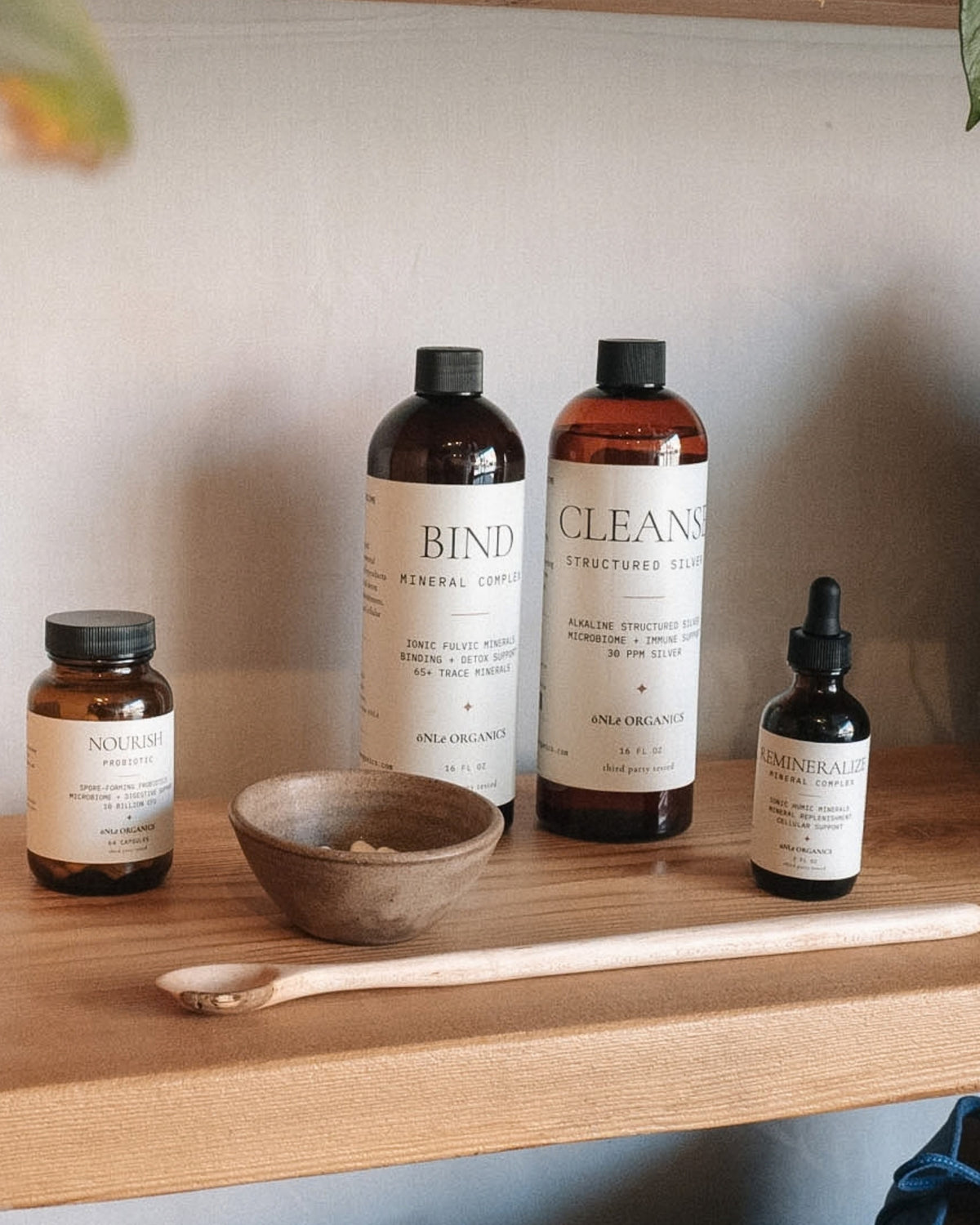
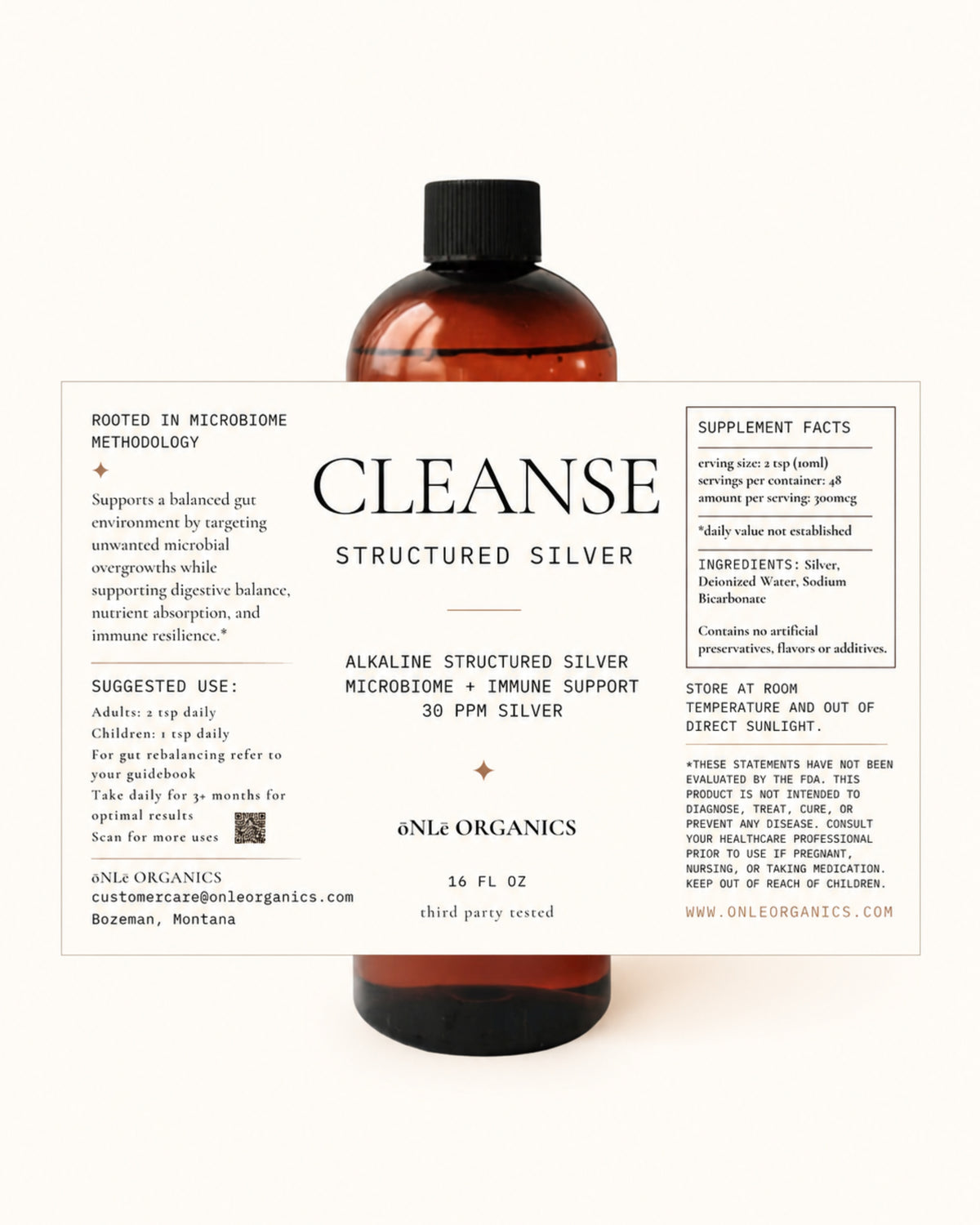
And so I remember calling you probably in a panic and I was How can I put this in his eye. And so we used cleanse in his eye. We used it as a compress. and he was so sweet and he would just let you hold it on there. And I could just feel that it was making him feel better because he would be still and he is never still. And he would just let me hold the compress on his eye. And we did that for a few days and it held up perfectly.
Yeah. we also living in Tennessee, we have so many mosquitoes and so many bugs and so many different things that can make you really itchy. So we rely on magic stuff all the time. I think that's our favorite. and and so we yeah, we just keep it out because it's just the communal four kids are constantly applying it. Let's see, other ways that other people might not use it. Sometimes we have made the cleaner with cleanse. yeah, I feel like pretty much if there's something that you would like cleaned, you can use cleanse. Like, we had my oldest son wrestles and he got ringworm. So we used magic stuff and cleanse on his ringworm. And so he could wrestle again.
*You are? We got back at perfect timing.
Looks like you got some bug bites. See. Tennesse. We need some magic stuff. You did? good.
Juniper: Cait, thank you for having this conversation with me. I feel like ōnlē couldn't possibly be better. you know, my family having a really hard experience and then being able to share that healing with others and then being able to work with you and grow with you and experience this side of life with you has made it exponentially better when I didn't expect it could ever possibly be better.
So I'm really grateful for you and for everything you do here and the love and kindness you share with these women and mothers and how you hold up all of our hand.
Cait: I'm so happy to be here.