

Histamine Is Not the Problem
Most women don’t begin by wondering about histamine.
They begin with hives that appear without an obvious cause. A child whose cheeks suddenly turn bright red after dinner. Itching that becomes unbearable at night. Sinus congestion that never completely clears. Headaches, dizziness, digestive symptoms, a racing heart, or anxiety that seems to come out of nowhere.
At first, each symptom gets treated as its own problem.
The rash gets a cream.
The congestion gets an allergy medication.
The digestive symptoms lead to another food being removed.
The racing heart and sudden panic are blamed on anxiety.
Then the reactions become harder to predict.
A food that was fine last week causes itching today. Leftovers suddenly create a headache or flushing. A new supplement makes everything worse. Your child develops hives after eating a meal they have eaten dozens of times.
Eventually, someone tells you that these are histamine reactions.
Maybe you are diagnosed with histamine intolerance. Maybe MCAS is mentioned. Maybe you are simply told to take an antihistamine, avoid high-histamine foods, and stay away from anything that seems to trigger a reaction.
Now histamine has a name, but you still don’t know why it is happening.
You are left trying to control the reactions without understanding why your body or your child’s body suddenly can’t handle things that were never a problem before.
This is where the entire conversation needs to change.
Histamine is not the problem.
Histamine is a necessary chemical messenger produced throughout the body. It helps the immune system respond to injury, infection, allergens, and substances it identifies as a threat. It supports stomach-acid production, affects blood vessels, participates in wakefulness, and helps the body expel what does not belong.
You need histamine.
The problem begins when the body produces or releases more histamine than it can break down and eliminate.
So the question is not, “How do I get rid of or suppress histamine?”
The question is, “Why has my body lost its ability to regulate it?”
That question leads directly to the gut.
What Is Actually Happening During a Histamine Reaction?
When mast cells recognize a threat, they release histamine and other inflammatory mediators.
Histamine then binds to receptors throughout the body and creates the response needed for protection. Blood vessels widen. Fluid moves into tissue. Mucus production increases. The skin can itch. The digestive tract can contract. The heart rate can change.
This is how histamine helps the body react quickly to something dangerous.
But when too much histamine is released, too much is produced inside the gut, or the body can’t break it down efficiently, that protective response becomes overwhelming.
It can show up as:
- Hives, itching, redness, or flushing
- Swelling
- Sinus congestion, sneezing, or watery eyes
- Headaches or migraines
- Dizziness
- Racing heart or changes in blood pressure
- Anxiety, restlessness, or a sudden feeling of panic
- Reflux, nausea, bloating, cramping, diarrhea, or constipation
- Menstrual and cyclical symptoms
- Difficulty sleeping
- Throat tightness or difficulty breathing
These symptoms can appear in multiple systems because histamine receptors exist throughout the body.
This isn’t a skin problem, a digestive problem, a sinus problem, and an anxiety problem all happening separately.
It’s one chemical messenger creating effects wherever its receptors are located.
Allergies, Histamine Intolerance, and MCAS Are Not the Same Thing
These terms are often used interchangeably because they can create similar symptoms, but they describe different patterns.
An allergy is an immune response to a particular substance. The body identifies something such as a food, pollen, animal dander, or insect venom as a threat and responds.
Histamine intolerance describes a situation in which the body’s total histamine burden exceeds its capacity to break histamine down. This can involve histamine from food, histamine released by mast cells, histamine produced by gut bacteria, and reduced activity of the enzymes responsible for processing it.
Mast Cell Activation Syndrome, or MCAS, involves repeated episodes of inappropriate mast-cell mediator release affecting multiple systems in the body. Formal diagnosis requires a specific pattern of symptoms, evidence of elevated mast-cell mediators during an episode, and improvement with medication that blocks those mediators.
Not everyone with itching, flushing, food reactions, or headaches has MCAS.
Not everyone with MCAS has the same triggers.
And not every histamine reaction is a traditional allergy.
But the gut matters in all three conversations because the microbiome, intestinal lining, immune system, and mast cells are in constant communication.
Mast Cells Are Trying to Protect You
Mast cells are not malfunctioning simply because they are releasing histamine.
They are immune cells positioned near the places where the body encounters the outside world, including the skin, respiratory tract, and digestive system.
Their location allows them to respond quickly.
If something dangerous enters the body, you want mast cells paying attention.
But mast cells also respond to the environment surrounding them.
If the intestinal barrier is under constant pressure, harmful organisms are producing inflammatory compounds, mold exposure continues, an infection is present, or the nervous system remains in a state of threat, mast cells continue receiving signals that something is wrong.
The body can become increasingly reactive because its immune cells are continually being told that protection is needed.
Suppressing the reaction can provide relief.
It does not answer why those protective cells remain on alert.
The Gut Is One of the Body’s Most Important Histamine-Regulating Environments
The gut doesn’t control histamine by itself, but it is one of the most important places where histamine is produced, encountered, broken down, and regulated.
Histamine enters the digestive tract through food.
Some gut bacteria produce histamine.
Mast cells inside the intestinal tissue release histamine.
The intestinal lining produces diamine oxidase, commonly called DAO, which helps break down histamine outside the cells, especially within the digestive environment.
A second enzyme, histamine N-methyltransferase, or HNMT, processes histamine inside cells throughout the body.
The liver, kidneys, intestinal lining, nutrients, enzymes, microbiome, and immune system all participate in histamine metabolism.
When the gut is healthy, these systems work together.
When the microbiome is imbalanced and the intestinal lining is inflamed or vulnerable, the body can produce more histamine while simultaneously losing part of its ability to break histamine down.
This is how the burden builds.
Some Gut Bacteria Produce Histamine
A gut imbalance means there is too much bad bacteria, yeast, mold, fungus, or parasites in the body and not enough beneficial bacteria.
That imbalance changes more than digestion.
Different microorganisms produce different compounds.
Some bacterial strains can convert the amino acid histidine into histamine. When those organisms become too abundant, microbial histamine production can increase inside the digestive tract.
At the same time, the loss of protective bacteria changes the intestinal environment surrounding mast cells and the gut lining.
The body can now be dealing with histamine from food, histamine released by immune cells, and histamine produced by microorganisms while trying to break it all down through an intestinal lining that is already under pressure.
This is why the answer can’t stop at identifying high-histamine foods.
Food is only one source of the total burden.
Other Bacteria Help the Body Regulate Histamine
The probiotic conversation is more complex than “probiotics are good” or “probiotics are bad for histamine.”
Bacterial effects are strain-specific.
Some strains can produce histamine. Others can degrade it, compete with histamine-producing organisms, support the intestinal barrier, or influence immune signaling in ways that help the body become less reactive.
This explains why someone can take one probiotic and experience more bloating, itching, flushing, anxiety, or digestive discomfort, then assume she can’t tolerate beneficial bacteria at all.
The reaction does’t prove that replenishing the microbiome is the wrong goal.
It tells us that the strains, dose, timing, existing microbial environment, and pace of introduction matter.
A reactive body needs thoughtful replenishment.
Gut Imbalance and Histamine Can Create a Cycle
When harmful organisms become too abundant, they can alter microbial metabolites, create inflammation, and place pressure on the intestinal barrier.
As the intestinal lining becomes more vulnerable, the immune system has more direct contact with food particles, microbial compounds, and other material it is trying to contain.
Mast cells respond.
More histamine is released.
That histamine and inflammation can further change digestion, intestinal motility, barrier function, and the microbial environment.
Now the body is caught in a cycle.
The gut imbalance increases immune reactivity.
The immune reactivity places more pressure on the gut.
The weakened gut has a harder time regulating the histamine being produced and released.
This is why histamine symptoms can spread and intensify over time.
The body isn’t becoming reactive to everything for no reason.
The environment underneath the reactions has continued changing.
Constipation Adds to the Histamine Burden
Histamine regulation isn’t only about what enters the body.
It is also about what leaves.
When poop remains in the digestive tract for days, microbial fermentation continues. Bacterial metabolites remain in the intestinal environment longer. The colon continues absorbing water, making stool harder and more difficult to pass.
The body also has fewer consistent opportunities to carry processed hormones, microbial waste, and other unwanted material out.
This is why someone can remove every high-histamine food and still experience itching, flushing, congestion, anxiety, headaches, or disrupted sleep while remaining constipated.
The food entering the body changed.
The body’s ability to carry waste out didn’t.
Daily, complete bowel movements are part of histamine support because the release process is not complete until the body eliminates what it has processed.
Histamine Reactions Can Change Throughout the Menstrual Cycle
Many women notice that their reactions are not consistent throughout the month.
A food feels fine one week and creates symptoms the next.
Itching, flushing, headaches, congestion, anxiety, heart palpitations, or sleep disruption intensify around ovulation or before a period.
This is because estrogen can influence mast-cell activity and histamine release. Histamine can also affect hormonal signaling. At the same time, the gut microbiome helps regulate how estrogens are processed and recirculated.
The microbiome, hormones, mast cells, liver, and bowel movements are part of one connected system.
This is why histamine symptoms can become more noticeable during hormonal transitions, including puberty, pregnancy, postpartum, and perimenopause.
Mold, Infections, and Stress Keep Sending Signals of Threat
Histamine reactions often become more intense during or after mold exposure, infection, illness, prolonged stress, or another significant burden on the body.
These are also not separate from mast-cell activity.
Mold and other environmental exposures can activate immune and inflammatory signaling.
Infections require an immune response.
Harmful microbial overgrowths continually interact with the intestinal lining and immune system.
Chronic stress changes digestion, intestinal motility, barrier function, sleep, immune signaling, and the nervous system’s perception of safety.
If these signals continue, the body continues responding.
Antihistamines Block the Signal
Antihistamines can be incredibly important.
They can calm hives, itching, congestion, swelling, and other symptoms. In severe situations, medication can be life-saving.
There is no shame in using something that helps you or your child function.
But understanding what an antihistamine does helps you understand what it doesn’t do.
H1 antihistamines, including medications such as cetirizine and loratadine, block histamine at H1 receptors. H2 blockers, including famotidine, act on H2 receptors and reduce gastric-acid secretion.
These medications reduce the body’s response to histamine at particular receptors.
They don’t correct why the body is producing, releasing, or failing to clear too much histamine.
They don’t eliminate excessive bad bacteria, yeast, mold, fungus, or parasites.
They don’t replenish beneficial bacteria.
They don’t repair the intestinal environment.
They don’t open elimination pathways.
They block part of the signal.
That can create necessary relief while the deeper work is happening, but blocking the signal is not the same as correcting why the signal became overwhelming.
Immediate Reactions and Root Healing Are Different Jobs
Just to be clear, root healing is not emergency medicine.
Throat tightness, difficulty breathing, faintness, a sudden drop in blood pressure, or signs of anaphylaxis require immediate medical treatment. Epinephrine is the first-line treatment for anaphylaxis.
You don’t attempt to rebalance your gut in the middle of a medical emergency.
You stabilize the immediate reaction.
Then, once the person is safe, you continue asking why the body has become so reactive and what needs to change underneath that pattern.
Immediate medication and root healing are not competing approaches.
They are doing different jobs.
One protects the person during an acute reaction.
The other addresses the conditions contributing to repeated reactivity over time.
A Low-Histamine Diet Can Create Space, but It Cannot Be the Entire Plan
When reactions become unpredictable, food starts feeling dangerous.
Freshness matters. Leftovers become complicated. Fermented foods are removed. Restaurant meals feel impossible. A mother starts packing separate food everywhere because she does not know what her child will tolerate that day.
Avoidance can bring relief because it reduces one source of histamine entering the body.
Sometimes the body needs that space.
But removing histamine from food does not eliminate histamine-producing bacteria, restore DAO activity in a compromised intestinal lining, regulate mast cells, correct constipation, or replenish beneficial bacteria.
And when the safe-food list keeps shrinking, the body receives less variety while the fear surrounding food continues growing.
The goal is not to prove that someone can tolerate every food immediately.
The goal is to use food strategically while restoring the body’s ability to process and regulate histamine.
A low-histamine diet can be a temporary support.
It is not the final answer.
Rebalancing a Reactive Body Requires a Different Pace
A body experiencing significant histamine reactions needs to be supported intelligently.
During rebalancing, bad bacteria, yeast, mold, fungus, parasites, toxins, heavy metals, and waste are being released. Everyone moves through this release phase. Some people notice it more than others.
When the immune system and mast cells are already highly reactive, pacing matters.
The body needs hydration, minerals, regular bowel movements, open drainage pathways, supportive food, nervous-system regulation, and enough time to process what is being released.
This is why someone with histamine intolerance or MCAS symptoms follows a gentler introduction inside the ōnlē Rebalance Method.
The goal is to meet the body where it is and move at a pace it can effectively process.
The ōnlē Rebalance Method Addresses Both Sides of the Histamine Pattern
A histamine problem cannot be fully addressed by removing high-histamine food or blocking histamine receptors.
The microbial environment underneath the reactions also needs to change.
The ōnlē Rebalance Method works through four connected actions.
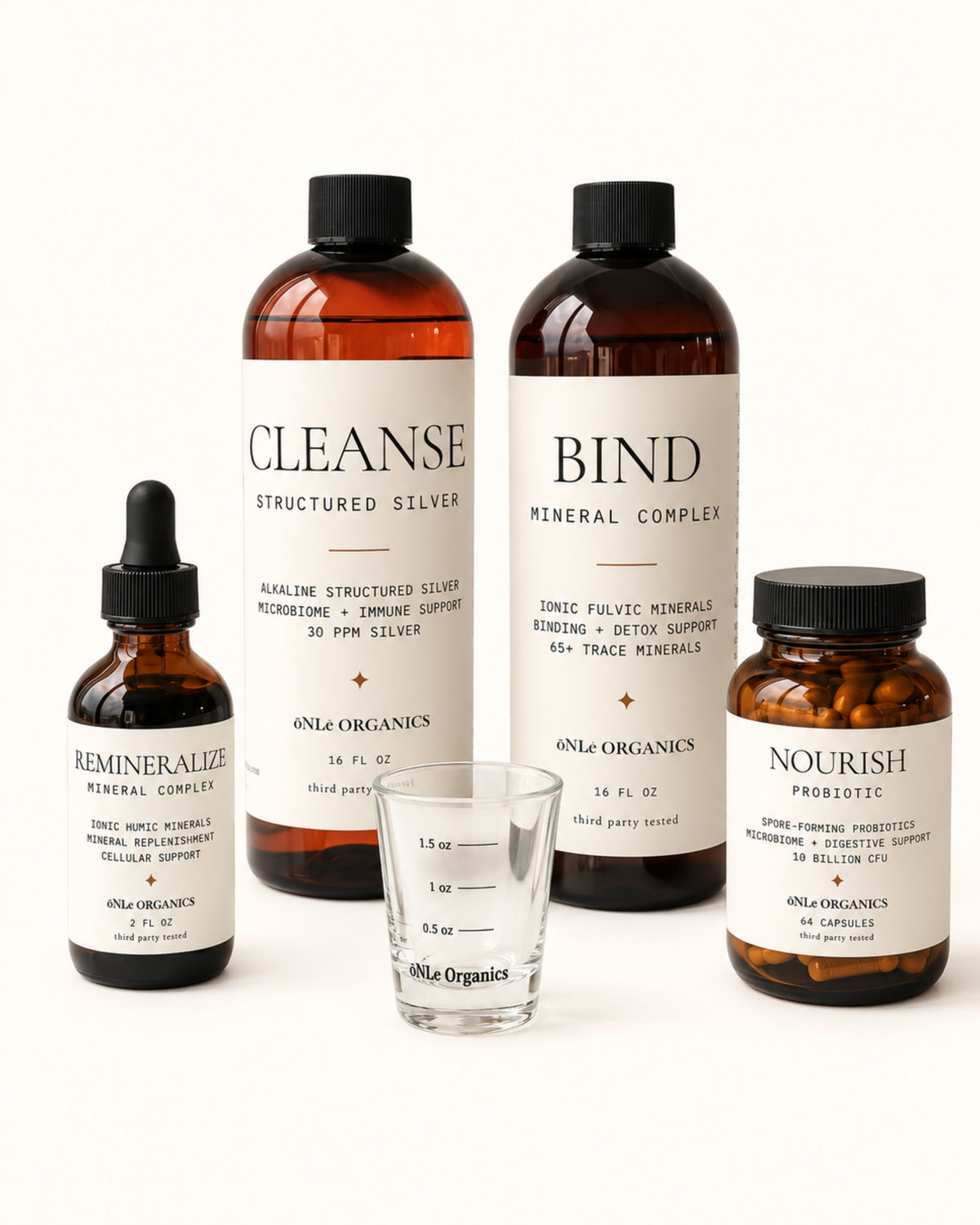
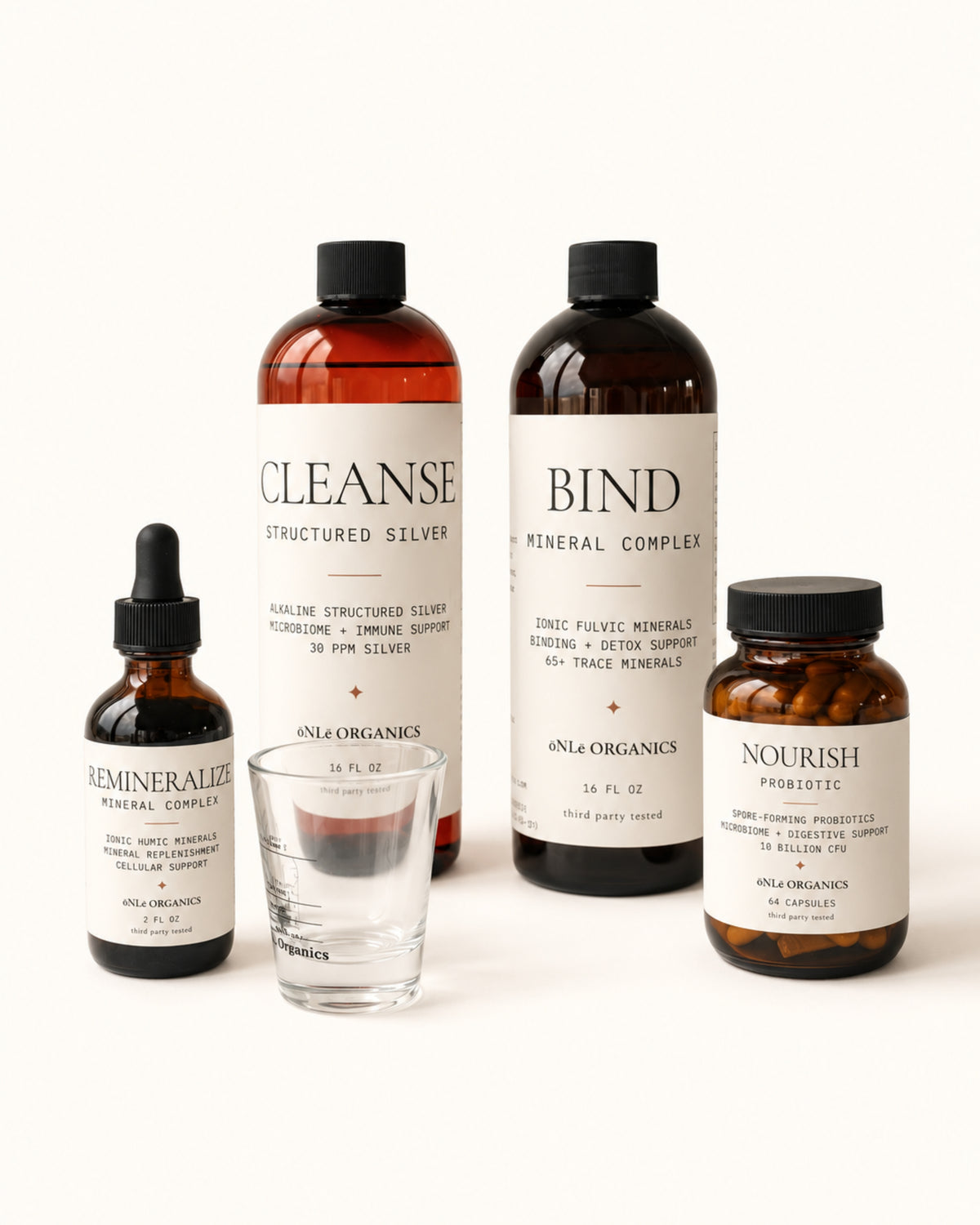
Cleanse targets the excessive bad bacteria, yeast, mold, fungus, parasites, and other harmful overgrowths contributing to inflammation and immune reactivity.
Bind supports the body in carrying out the overgrowths, toxins, heavy metals, waste, and unwanted material being released.
Nourish replenishes beneficial spore-forming bacteria and supports the wider microbial community involved in digestion, intestinal integrity, immune regulation, and microbial balance.
Remineralize restores essential minerals supporting hydration, digestion, enzyme activity, nervous-system function, bowel regularity, and the body’s natural elimination pathways.
The ōnlē Method course teaches you how to prepare the body, support drainage, focus on food strategically, understand the release phase, regulate the nervous system, and introduce the method gently when histamine reactivity is present.
This is not one probiotic being added to an inflamed gut.
It’s not an aggressive cleanse.
It’s not another attempt to silence the body.
It’s a complete methodology for changing the environment the body is responding to.
Healing Is Not a Life Spent Avoiding Histamine
Histamine is not something you can or should remove from the body.
It is part of being alive.
It helps protect you from infection, injury, allergens, and substances that do not belong.
The goal is not to fear histamine.
The goal is to restore balance between how much histamine is produced, how much is released, how effectively it is broken down, and how consistently it leaves the body.
That is how life begins opening again.
You stop checking every ingredient because the safe-food list has narrowed to almost nothing.
Your child stops flushing after meals that never used to create a problem.
You stop waking with your heart racing and wondering what you ate wrong.
You stop treating the skin, sinuses, digestion, anxiety, hormones, and sleep as unrelated problems.
The reactions begin making sense because you can finally see what connects them.
Histamine was never the enemy.
It was the messenger revealing that the body had lost part of its ability to regulate and protect itself.
Suppressing the message can bring relief.
Understanding and changing what is creating it is how healing begins.
Frequently Asked Questions
What is histamine?
Histamine is a chemical messenger involved in immune defense, stomach-acid production, blood-vessel regulation, wakefulness, and the body’s response to allergens, infection, and injury.
Histamine is necessary. Symptoms develop when histamine production and release exceed the body’s ability to break it down and eliminate it.
What is histamine intolerance?
Histamine intolerance describes a pattern of symptoms that occurs when the body’s total histamine burden exceeds its capacity to process histamine.
That burden can include histamine from food, mast-cell release, and histamine-producing gut bacteria, combined with reduced breakdown in the intestinal environment.
There is currently no single universally accepted test that diagnoses every case of histamine intolerance. Symptoms, food patterns, medications, digestive health, and other possible conditions all need to be considered.
What is MCAS?
Mast Cell Activation Syndrome is a condition involving recurrent episodes of inappropriate mast-cell mediator release affecting multiple body systems.
A formal diagnosis involves a characteristic pattern of symptoms, measurable changes in mast-cell mediators during an episode, and improvement with medication targeting those mediators.
MCAS, histamine intolerance, and traditional allergies can overlap, but they are not the same diagnosis.
What does the gut microbiome have to do with histamine?
Some gut bacteria produce histamine. Other bacteria help degrade histamine, compete with histamine-producing organisms, support the intestinal barrier, and influence immune regulation.
The intestinal lining also produces DAO, one of the primary enzymes responsible for breaking down histamine within the digestive environment.
When the microbiome is imbalanced and the intestinal lining is under pressure, histamine production can increase while breakdown becomes less effective.
Can constipation make histamine symptoms worse?
Constipation allows microbial fermentation and metabolite production to continue while poop remains in the colon. It also delays the body’s opportunity to carry processed hormones, microbial waste, and other unwanted material out.
Someone can reduce dietary histamine and still struggle if the microbiome remains imbalanced and the body is not eliminating consistently.
Why do histamine symptoms change throughout the menstrual cycle?
Estrogen can influence mast-cell activity and histamine release. The gut microbiome also helps regulate estrogen metabolism and recirculation.
This relationship helps explain why some women notice more itching, flushing, headaches, congestion, anxiety, digestive symptoms, or sleep disruption around ovulation or before their period.
Are all probiotics bad for histamine intolerance?
No. Probiotic effects are strain-specific.
Some bacterial strains produce histamine. Others degrade histamine or support the intestinal and immune environment in ways that help regulate reactivity.
The strain, dose, timing, existing gut environment, and pace of introduction all matter. This is why Nourish is introduced more gradually for someone with significant histamine reactivity.
Do antihistamines heal histamine intolerance or MCAS?
Antihistamines block histamine at specific receptors and can provide important symptom relief.
They don’t correct why the body is producing, releasing, or failing to clear too much histamine. They don’t restore the microbiome, remove harmful overgrowths, repair the intestinal environment, or correct impaired elimination.
Do I have to follow a low-histamine diet forever?
No. A low-histamine diet can temporarily reduce the amount of histamine entering the body and create space while deeper healing occurs.
The long-term goal is not permanent restriction. It is restoring the body’s ability to regulate histamine so food no longer controls every part of life.
Can I begin rebalancing if my body is highly reactive?
Yes, but the pace matters.
The ōnlē Rebalance Method course includes specific guidance for approaching rebalancing more gently when histamine intolerance or significant reactivity is present. This includes supporting drainage, hydration, bowel movements, food, minerals, and the nervous system while introducing the products at a pace the body can process.
When is a histamine reaction an emergency?
Difficulty breathing, throat tightness, faintness, a sudden drop in blood pressure, or other signs of anaphylaxis require immediate emergency treatment.
Epinephrine is the first-line treatment for anaphylaxis. Gut rebalancing addresses the longer-term environment beneath repeated reactivity. It does not replace emergency care.
Other Supportive Articles
What It Actually Means to Rebalance Your Gut: Explain how eliminating, binding, replenishing, and remineralizing work together to restore the microbial environment.
Your Body Isn’t Constipated Because It Needs MiraLAX: Connect incomplete elimination to histamine, microbial metabolites, hormones, anxiety, and immune burden.
The Mold Conversation No One Is Having: Explain how mold exposure can alter the gut environment and keep immune cells receiving signals of threat.
Editorial Sources
Histamine Intolerance and Histamine Metabolism
Histamine Intolerance: Symptoms, Diagnosis, and Beyond
Reviews histamine metabolism, DAO activity, symptoms, diagnostic limitations, and approaches used to manage suspected histamine intolerance.
Histamine-Producing Bacteria and Their Role in Gastrointestinal Disorders
Reviews bacterial histamine production and the relationship among microbial activity, histamine signaling, and gastrointestinal health.
Mast Cell Activation Syndrome
Diagnosis and Management of Mast Cell Activation Syndrome in Canada: A Practical Approach
Provides current clinical guidance for distinguishing suspected MCAS from other conditions and applying consensus diagnostic criteria.
Food and Histamine
Low-Histamine Diets: Is the Exclusion of Foods Justified by Their Histamine Content?
Reviews the variability of histamine content in foods and the limitations surrounding standardized low-histamine food lists.
The Microbiome, Hives, and Immune Reactivity
Altered Gut Microbiota in H1-Antihistamine-Resistant Chronic Spontaneous Urticaria Associates With Systemic Inflammation
Examines microbial differences and inflammatory markers in people with chronic spontaneous urticaria who did and did not respond to H1 antihistamines.
Editorial note: Histamine intolerance, allergies, chronic urticaria, and MCAS can create overlapping symptoms but are not interchangeable diagnoses. This article explains the microbiome as an important part of histamine regulation and immune signaling, not as the sole cause of every histamine-mediated condition.



read more
Learn how constipation and slower digestion during GLP-1 use can change the gut microbiome and influence anxiety, sleep, and nervous-system health.
Learn how microbial inheritance, birth, antibiotics, medications, modern food, refined sugar, pesticides, and glyphosate contribute to widespread gut imbalance.